
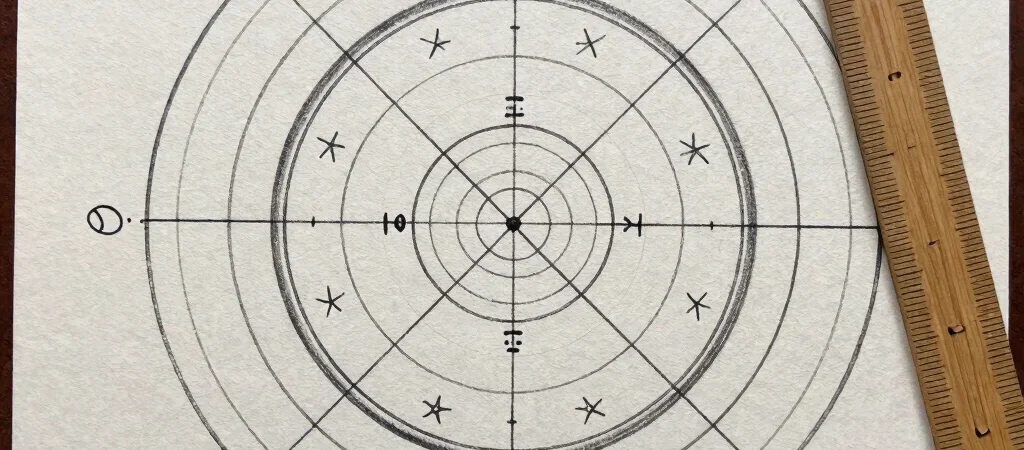
A kundli can look like a dense grid of symbols on first glance. The temptation is to find one placement and treat it as the whole story, but astrology is generally interpreted through relationships among different chart elements.
Notice the chart structure
Start by identifying the chart’s basic parts: signs, houses, and the planets shown within them. In traditional astrological frameworks, these elements serve different interpretive roles, so a symbol’s meaning depends partly on where it appears.
The ascendant is another term you may encounter; it refers to the sign rising on the eastern horizon at the time and place used for the chart calculation. Because it relies on birth details, it is worth checking those details before building an interpretation around it.
Keep interpretation in context
Rather than reading a single placement as a verdict, ask what other parts of the chart an astrologer would consider alongside it. Different traditions and practitioners can weigh chart factors differently, so a clear explanation should name the framework it is using.
Astrology can offer a language for reflection, but a chart is not a guarantee of what will happen. Read explanations with curiosity, note where an interpretation comes from, and leave room to decide what is meaningful to you.